
Signs Your Concrete Is Sinking (and When to Act)
Your concrete rarely fails all at once. It sinks a little at a time — a fraction of an inch one season, a little more the next — until one day the step up into your house feels taller, the driveway holds a puddle it never used to, or somebody catches a toe on the sidewalk. By the time most people call us, the signs have been there for a while. Here's how to spot them early, while the fix is still the easy one.
1. One slab sits lower than the one next to it
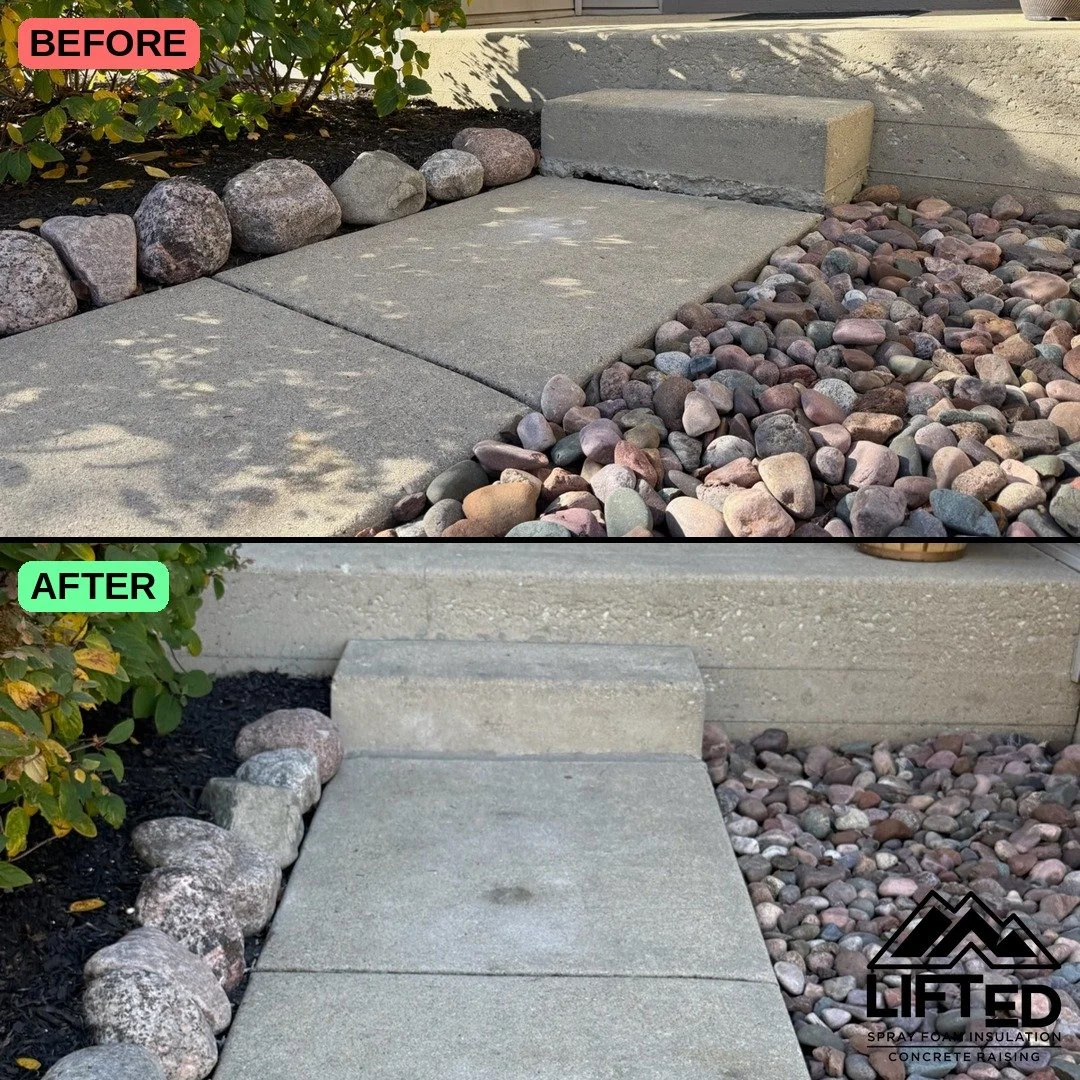
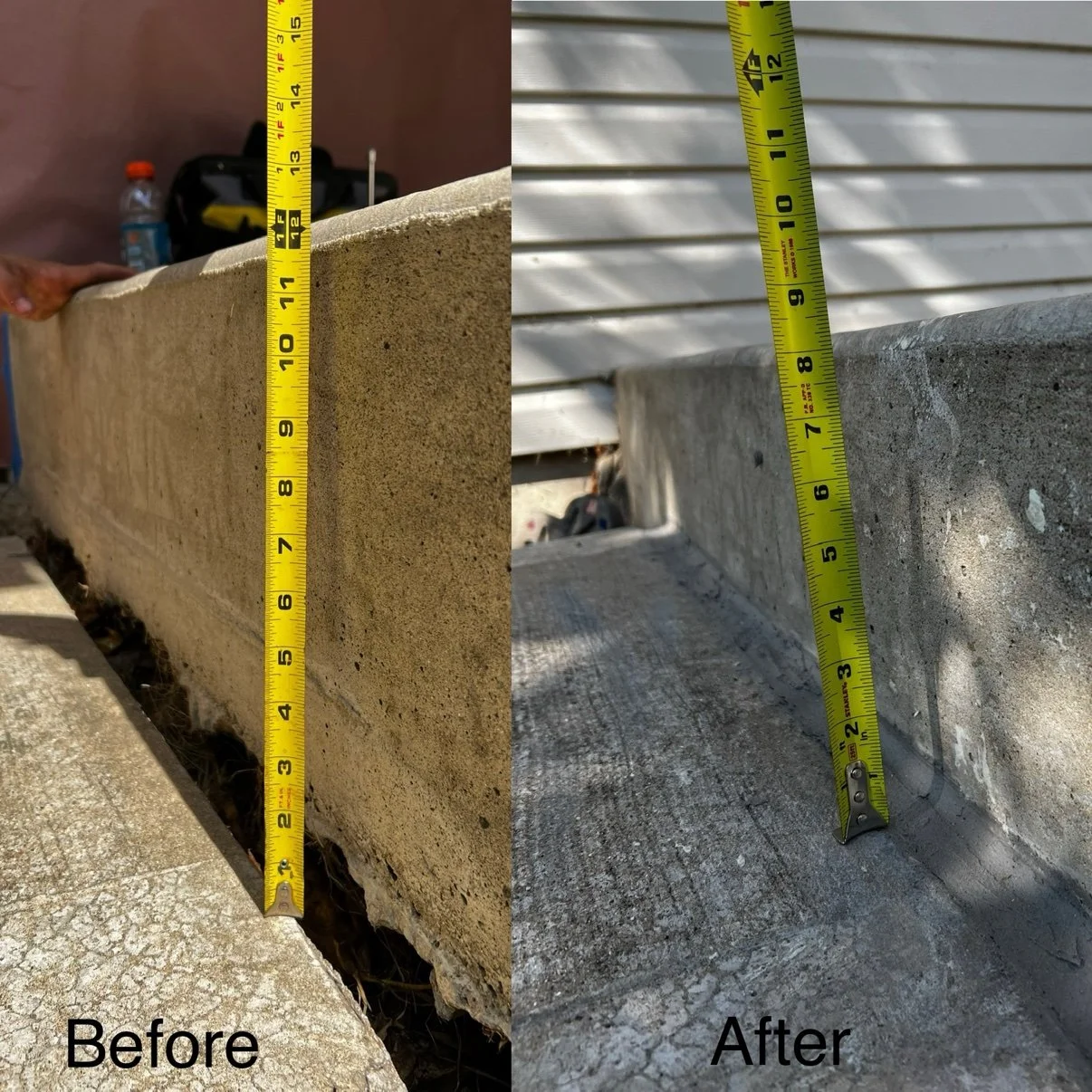
This is the big one. Walk your driveway, sidewalk, and patio and look at the joints where two slabs meet. If one side has dropped — even a quarter inch — that slab is sinking. On a sidewalk, a height difference over a quarter inch is a trip hazard under the Illinois Accessibility Code, and it's the kind of thing that turns into a rolled ankle or a liability headache if a guest or a delivery driver catches it. We lifted a walkway and stoop in Plainfield last week where the lip had gotten bad enough to trip anyone not watching for it.
2. Cracks that keep growing
Hairline cracks are normal. Cracks that widen, lengthen, or run from a corner toward the middle of the slab are telling you the ground underneath is moving or washing away. A crack on its own isn't always a sinking problem — but a crack plus a slab that's out of level almost always is.
3. Water pools where it didn’t used to
After a rain, check where the water sits. A healthy slab sheds water away from your house. A sunken one holds puddles — or worse, tilts so water runs toward your foundation. That standing water isn't just an annoyance: it seeps down through the joints, washes more soil out from under the slab, and speeds up the sinking. It's a cycle, and it doesn't fix itself.
4. Gaps opening up
Look where your driveway meets the garage floor, where the stoop meets the house, and along your foundation wall. A gap that wasn't there before means something has dropped or pulled away. Under a stoop, you can sometimes see daylight into a hollow space — that's a void, and the slab above it is being held up by less and less every year.
5. Doors, gates, and steps feel “off”
A gate that suddenly drags, a step that feels taller than it used to, a patio door threshold with a growing drop on the other side — your house is often the first measuring tool you have. Concrete moves slowly enough that you adapt to it, until one of these little annoyances points it out.
Why it happens
Under almost every sunken slab we lift, it's the same story: the soil underneath settled, shrank, or washed out. Around here it's usually some mix of Illinois clay shrinking in dry summers, water washing fines out through open joints, and freeze-thaw working on it every winter — water gets under the slab, freezes, expands, and when it melts it leaves a bigger void than it found. The slab itself is usually fine. It's the ground that quit holding it up.
Homeowner don’ts — things that make it worse
We see these on job sites constantly, and we get why people do them — you're trying to protect your concrete. But every one of them treats the surface while the real problem is underneath, and a couple of them can take lifting off the table entirely.
Don't pack the gap with bagged concrete mix. Homeowners mix up a bag of concrete and shove it into the exposed gap or joint where a slab has dropped. It hardens into a wedge bonded to both slabs — and a slab that's tied to its neighbor, or to your foundation, can't move. Lifting works because the slab is free to come up; lock it in place with concrete and you may have just made that slab unliftable, permanently.
Don't pour a concrete "ramp" over the sunken edge. Feathering fresh concrete over the low spot to smooth out the step feels clever, but it adds weight on top of a slab that's already losing its support — so it sinks faster — and the whole patch has to be busted back off before the slab can ever be lifted.
Don't fill the joint with canned foam. The spray-can foam from the hardware store is not the same thing as lifting foam. It doesn't reach the void under the slab, it expands wherever it wants, and it's a mess that has to be cleaned out before real work can start.
Don't layer sealant over sealant over sealant. One clean layer of quality sealant in a properly prepped joint is a good thing — it's part of what we do. But layers upon layers of mixed big-box brands, smeared over old failing sealant, just have to be ground back out before the joint can be sealed right — and none of it stops the sinking, because the void under the slab keeps growing either way.
If you're not sure whether something helps or hurts, send us a photo before you do it. We'll tell you straight.
When to act
Honestly? When you first notice it. Sinking concrete doesn't stabilize — the void keeps growing, the slab keeps dropping, and the worse it gets, the more foam it takes to bring it back and the more likely the slab cracks under its own weight while it waits. A slab that could have been lifted in an afternoon this year can turn into a tear-out in a few years. And lifting typically runs about 25% of what replacement costs, so catching it early is the difference between the cheap fix and the expensive one.
If the slab is still in one piece, it can almost always be lifted — we raise it back to level with polyurethane foam, fill the void underneath so it stays put, and back it with a 15-year warranty.
Not sure about yours?
Walk your concrete this week and look for the five signs. If you find one, take a photo and text it to us at (815) 200-6880, or request a free estimate — we'll tell you straight whether it can be lifted or whether it's one of the rare ones that really does need replacing.
— Adam Smit, Lifted Spray Foam Insulation & Concrete Raising, Wilmington, IL