
Spray Foam Insulation vs. Fiberglass: Which Is Better for Your Home?
If you're trying to warm up a cold house, finish a pole barn, or fix a crawl space that's making your floors freezing in the winter, you'll run into the same choice almost everyone does: fiberglass or spray foam insulation?
Fiberglass has been the default for a long time, and it still has its place. But it's not the same product as spray foam, and in a lot of the places we get called for — crawl spaces, rim joists, attics, basements, and metal buildings — that difference is the whole ballgame. Here's an honest side-by-side.
How each one actually works
Fiberglass is batts or rolls of spun glass fibers that get cut and pushed into place between studs and joists. It slows heat transfer by trapping air in the fibers. It does not seal the cavity. Air can still move through and around it, especially anywhere the batt had to be cut around a wire, a pipe, or an outlet box.
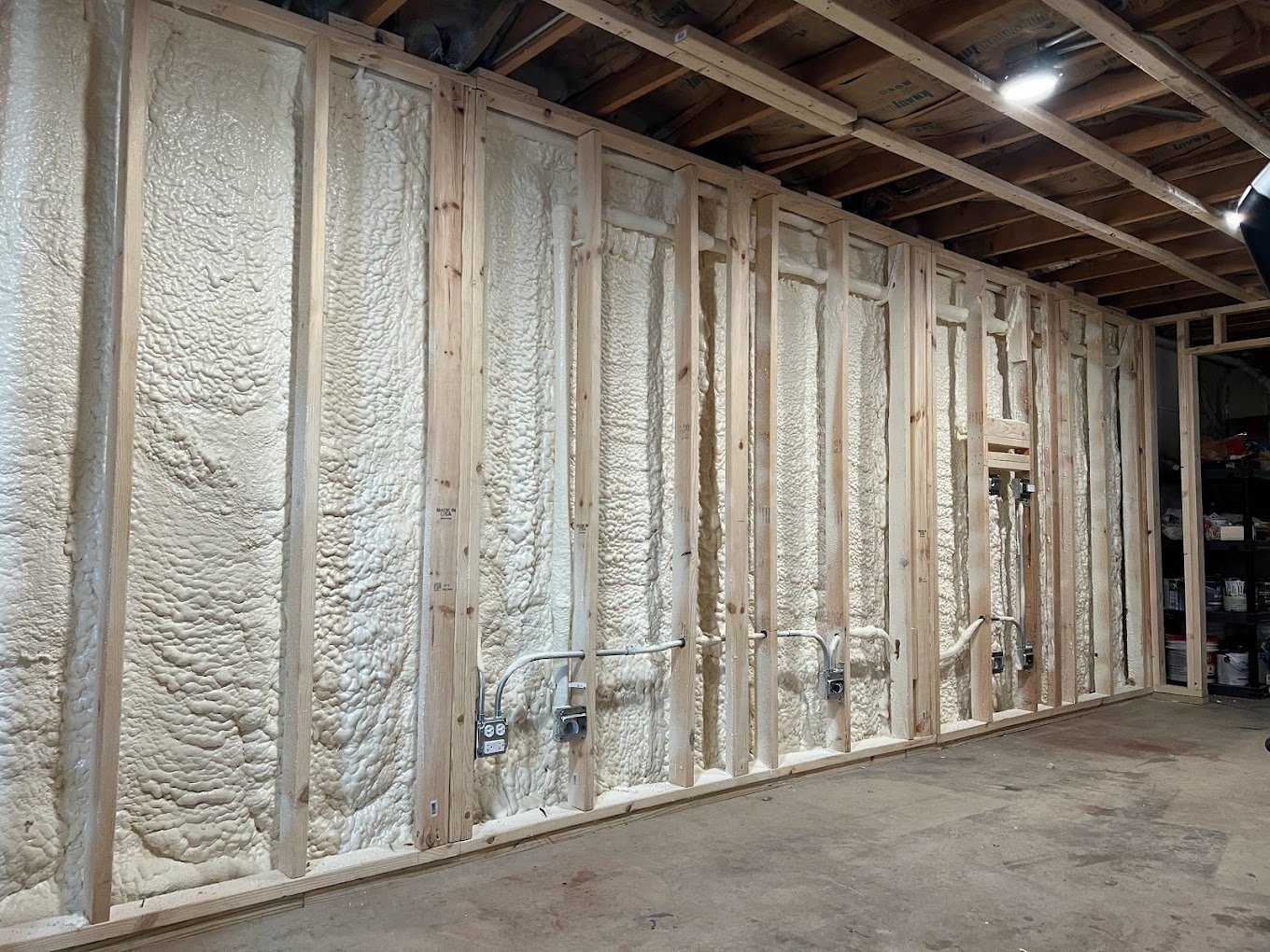
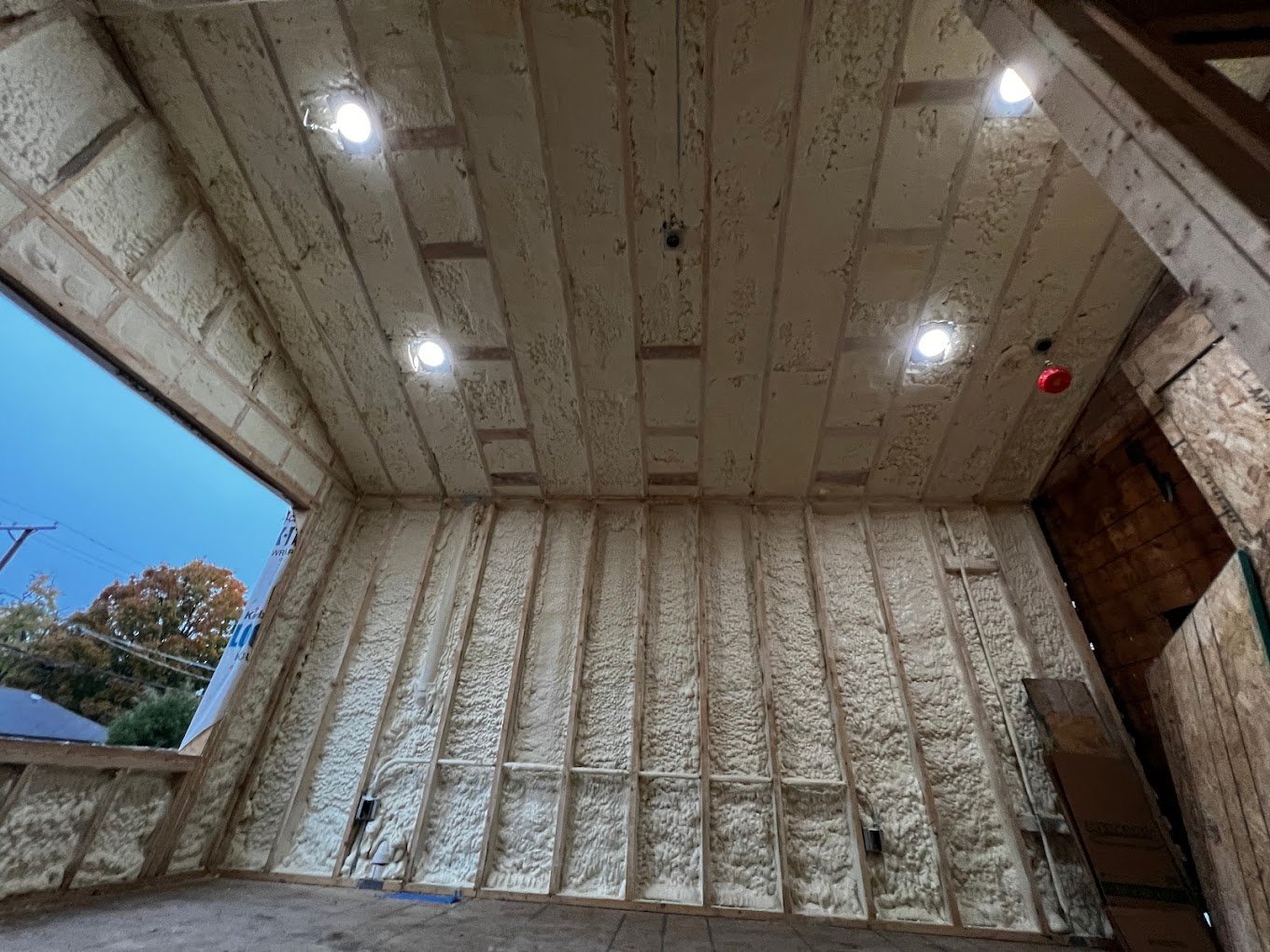
Spray foam insulation is sprayed on as a liquid and expands in place, filling the cavity and sticking to the surface around it. At Lifted we install closed cell spray foam. Because it expands to fit, it fills the gaps, cracks, and odd shapes that batts leave open — and as it cures it creates an air seal, not just a layer of insulation. That's two jobs in one pass, and it's the biggest practical difference between the two.
Air leaks: where fiberglass falls short
A lot of comfort problems aren't really insulation problems — they're air-leak problems. Cold floors over a crawl space, a room that's always drafty, a house that feels cold even when the heat is running: that's usually outside air moving in through the rim joist, the attic, and a hundred small gaps.
Fiberglass doesn't stop that air. You can have a thick batt in the wall and still feel the draft move right through it. Closed cell spray foam seals those gaps as it insulates, which is why it's often the fix we recommend for rim joists, crawl spaces, and attics in older homes around Wilmington, Braidwood, Joliet, Morris, and Plainfield. If the air can't get in, the heat you paid for stays in the house.
Moisture: crawl spaces, basements, and pole barns
This is the other place the two products separate.
Fiberglass can absorb and hold moisture, and when batts get wet they can sag, compress, and lose the air pockets that make them work. In a damp crawl space or basement, sagging batts that fall away from the floor or wall aren't insulating anything anymore — and a damp, dark cavity is not a place you want a material that can hold moisture.
Closed cell spray foam resists moisture and doesn't sag or settle out of place. It bonds directly to the surface, which is also why it's the go-to for pole barns and metal buildings: it insulates the metal skin and helps stop the condensation — the "sweating" — that drips inside an uninsulated shop all winter and spring. If you've got a building you want to actually use year-round in Coal City, Kankakee, or anywhere in our service area, this is usually the conversation we end up having.
Fit and the places that are hard to reach
Batts work best in clean, standard, wide-open cavities — new construction with the walls open and nothing in the way. Real houses are rarely that clean. Rim joists are narrow and boxed in. Crawl spaces have pipes, ducts, and wiring running every direction. Pole barn steel has ribs and fasteners.
Spray foam doesn't care about any of that. It conforms to the shape it's sprayed into, so it covers the spots that are hardest to cut fiberglass for — and those are, not coincidentally, usually the spots leaking the most air.
When fiberglass is still the right call
We'll tell you straight, like we do on concrete: spray foam isn't always the answer.
If you're insulating a simple, dry, wide-open wall or ceiling on a tight budget, you have easy access, and air sealing isn't your main problem, fiberglass can do the job it's asked to do. For a small DIY project in an accessible attic or a shed you don't heat, it may be all you need.
Where we talk homeowners out of fiberglass is when the real problem is drafts, cold floors, moisture, or a metal building — because in those cases the cheaper material often isn't solving the problem you called about. You end up paying to insulate and still living with the same cold room.
The bottom line
If you just need to fill a clean, dry cavity, fiberglass is a reasonable, familiar option. If you need to insulate and air-seal, deal with moisture, warm up cold floors, or make a crawl space, basement, attic, or pole barn genuinely comfortable, closed cell spray foam insulation does things fiberglass simply wasn't built to do.
Not sure which one your house or shop actually needs? Send us a photo of the space or request a free estimate and we'll tell you straight — even if the answer is that you don't need foam for it.
Free estimates — call or text 815-200-6880.
— Adam Smit, Lifted Spray Foam Insulation & Concrete Raising, Wilmington,
IL
About the author — Adam Smit is the owner of Lifted Spray Foam Insulation & Concrete Raising in Wilmington, IL. He and his crew lift sunken concrete and install closed cell spray foam across Will, Grundy, and Kankakee counties.