
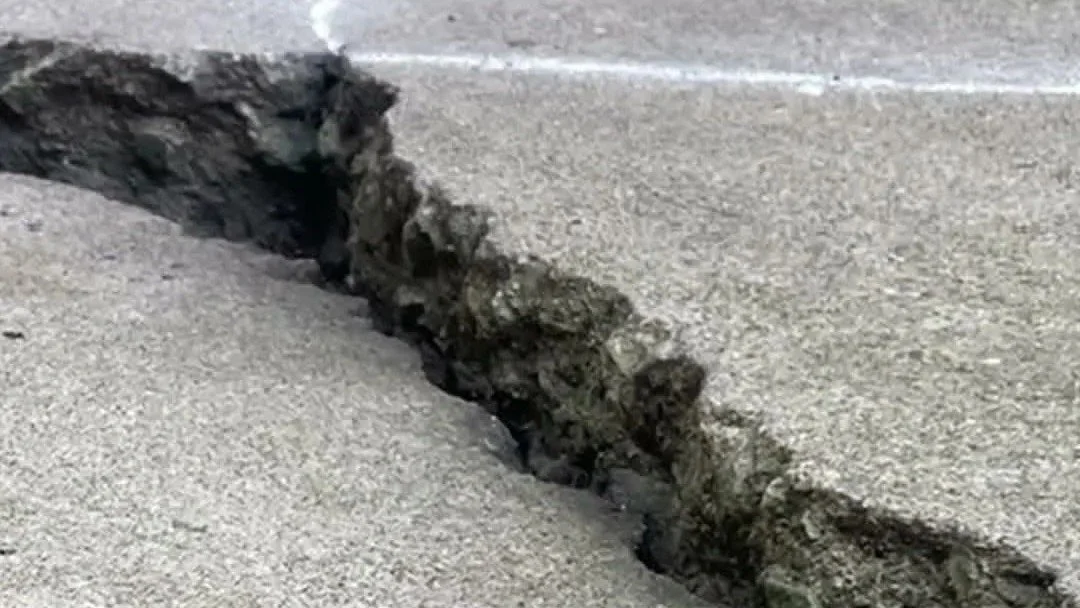
Freeze-Thaw and Sunken Concrete: What Winter Does to Your Driveway, Sidewalk, and Stoop
Winter in northern Illinois doesn't just make concrete cold. It works on it — a little water, a freeze, a thaw, and repeat, all season long. A slab that looked fine in October can show a bigger lip at the sidewalk joint by March, hold a puddle it never used to, or send water toward your foundation instead of away from it. Here's what freeze-thaw does to sunken concrete, and when concrete leveling is the fix.
How freeze-thaw sinks concrete in the first place
Concrete sinks when the ground underneath it stops supporting it. Soil washes out through open joints, poorly compacted soil settles, and voids open up under the slab. Freeze-thaw speeds every part of that up.
Water gets in through joints and cracks. When it freezes, it expands and pushes. When it thaws, it leaves a little more space behind — and meltwater carries a little more soil out with it. Over an Illinois winter, a small void becomes a bigger one. The slab doesn't have to crack to drop. It just follows the empty space down.
That's why so much sinking shows itself at the spring thaw. The damage was building all winter; spring is when you see how far things moved.
The signs winter leaves behind
Walk your driveway, sidewalk, patio, and stoop when the snow clears — and again in spring — and look for these:
One slab sitting lower than the next. A lip at a joint that got taller over winter is a slab that dropped — and on a sidewalk, even a small height difference is a trip hazard.
New or widening cracks. Hairline cracks are normal. Cracks that grow, alongside a slab that's out of level, mean the ground underneath is moving.
Water pooling where it didn't used to. A healthy slab sheds water away from the house. A sunken one holds puddles — and that water seeps through the joints, washes out more soil, and makes the sinking worse next winter.
Gaps at the garage, stoop, or foundation. A new gap where your driveway meets the garage, or where the stoop meets the house, means something has settled.
None of those fix themselves, and the next freeze-thaw season will work on whatever this one left behind.
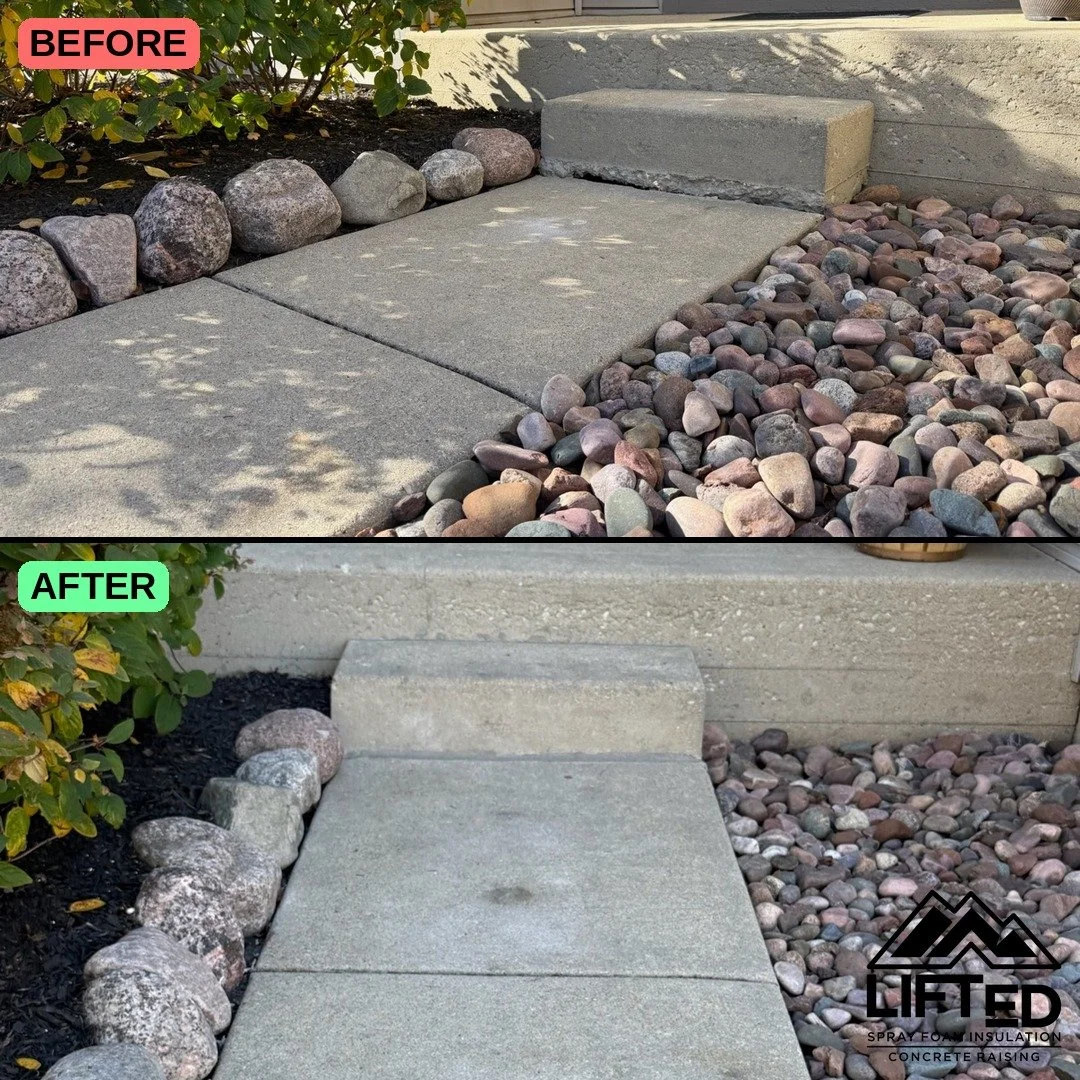
Concrete lifting vs. waiting for spring
Homeowners ask us the same question this time of year: can concrete be leveled in winter, or should I wait until spring?
The honest answer on timing depends on the conditions on the day — what's frozen, what's clear, and what the slab needs. We lift all winter when conditions allow — if the ground and the slab are workable, we can level it. If a hard freeze has everything locked up, we'll assess it now and get you scheduled as soon as it breaks.
What shouldn't wait is the look. If you spot a new lip, pooling water, or a gap this winter, get it assessed, even if the lift itself is scheduled for better conditions. An assessment tells you whether you're looking at a lift, a void that needs filling, or a slab too far gone for lifting — before another season makes the call for you. Waiting on a slab that's already tilting water toward your foundation is the expensive version of this problem.
How concrete leveling fixes the void underneath
Concrete lifting — also called concrete leveling and, around here, concrete raising — raises your existing slab back to level by filling the void underneath it. It's the same family of work older homeowners know as mudjacking or slab jacking; Lifted lifts with polyurethane foam, which is why you'll also hear it called poly jacking.
Here's the process: we drill small holes in the settled slab, inject material underneath to fill the void and raise the concrete back to level, then patch the holes. Those holes are only 3/8 of an inch — smaller than a dime.
There's no tear-out and no demolition. Most jobs are done the same day, and you can use the surface again the same day. Lifting typically runs about 25% of what replacement costs, because you're fixing the slab you already own instead of buying a new one.
Every concrete lifting job we do is backed by a 15-year warranty against future sinkage. If the concrete we lifted sinks again, we come back and make it right. The warranty covers the lifting and injection work itself; crack repair and joint sealant are maintenance items and aren't part of it.
When replacement is the right call instead
We'll tell you straight: lifting isn't always the answer. If a slab is cracked into pieces, crumbling, or heaved up by tree roots instead of settled down, raising it won't make it whole again — that's a replacement conversation. Part of our free estimate is telling you honestly which side of that line your concrete is on. A solid slab that has settled, with a void underneath it, is the one lifting was made for — and winter is often what put it there.
The bottom line
Freeze-thaw is a cycle: water gets in, it freezes and pushes, it thaws and washes soil out, and the slab drops a little more. Concrete leveling breaks that cycle by filling the void and putting the slab back where it belongs — same day, no tear-out, for about a quarter of what replacement runs, backed for 15 years.
If winter showed you a new lip, puddle, or gap around your home in Wilmington, Braidwood, Joliet, Morris, Plainfield, Coal City, Kankakee, or anywhere in our service area, send us a photo or request a free estimate and we'll tell you straight what we'd do.
Free estimates — call or text 815-200-6880.
— Adam Smit, Owner, Lifted Spray Foam Insulation & Concrete Raising, Wilmington, IL
About the author — Adam Smit is the owner of Lifted Spray Foam Insulation & Concrete Raising in Wilmington, IL. He helps homeowners across Will, Grundy, and Kankakee counties choose the right insulation for their homes, barns, and crawl spaces.